
 Search

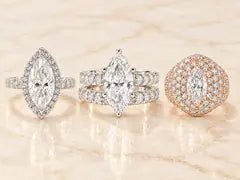


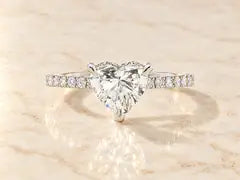

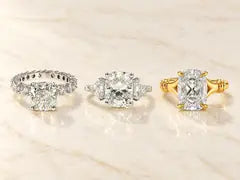


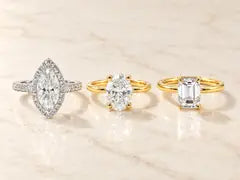

“Start with a beautiful ring on a great band, and think about the wedding bands that go with it.” Trax, at the jewelry store on 47th Street
46 rings, each with a natural diamond center. The middle one is about a carat, the largest a canary over 8.
Of 15 rings here bought in the year, most held a round center under 0.75 ct. A daisy and a halo led, 3 each.
Buyer's guide
How to choose a natural diamond engagement ring
46 rings, each with a natural diamond center. The middle one is about a carat, the largest a canary over 8.
Of 15 rings here bought in the year, most held a round center under 0.75 ct. A daisy and a halo led, 3 each.
Questions we get in the store
Is every diamond on these rings natural?
Yes. Every center here is a natural diamond, mined rather than grown, and every listing marks the rest of its diamonds natural as well. If you want that in writing for the ring you choose, ask the desk before you buy.
Should I choose a natural or a lab-grown diamond?
Choose whichever she would want, since either one is a real diamond. Natural formed in the earth and is the rarer stone. A grown one of the same size and grade is easier to find, and lab-grown engagement rings have their own page.
How many carats should a natural engagement ring be?
Start near a carat, the middle of the centers offered here. Most rings bought in the year held less, under three quarters of a carat. Read the center line, because the small stones are weighed apart and often outweigh it.
More questions we get
What color and clarity should a natural center be?
Take H or I color with SI clarity for the most size that still looks white once set. E color and VS clarity and better are rarer grades. With SI, have the desk say whether anything is visible without a loupe.
Does a natural center come with a grading report?
Only one listing here names a lab report for its center. On any other ring, ask the desk before you pay whether a lab graded the stone, which lab, and to see the report. Get any missing grade in writing.
How do I get her ring size while keeping the proposal secret?
Have one of her own rings measured, from the finger the new one will sit on, or ask a friend who knows her size and keeps a secret. Most rings here come in half sizes, so measure to the half.
14K, 18K or platinum for a natural engagement ring?
Choose 18K for the deeper yellow, as on most rings here, knowing it marks sooner. 14K is harder for daily wear. Platinum stays white unplated, and three colored centers here sit in platinum with 18K yellow gold.
Can I return a natural diamond engagement ring?
Yes, inside fourteen days from delivery, if the ring is unworn and nothing on it has changed. It travels only on the return label the desk issues. Five percent is held back for restocking, along with the return shipping. Resized and custom rings stay final.
How much does a natural diamond engagement ring cost?
Each listing prints its own price. The center sets most of it, by carat, then color, clarity and shape. The metal and small stones add the rest. For another center, ask in the live chat, or call or text 212-872-9692 from 10 AM ET.


