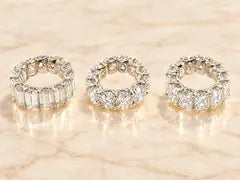
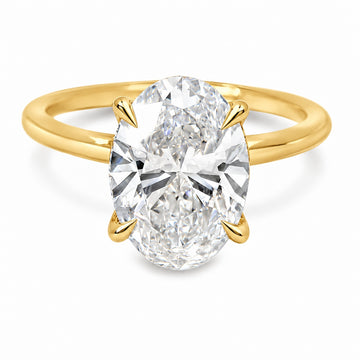
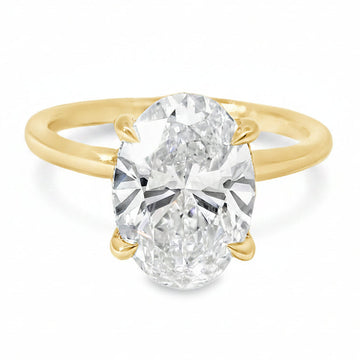
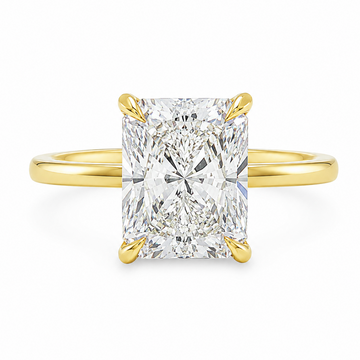
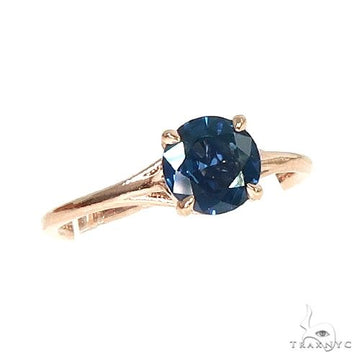
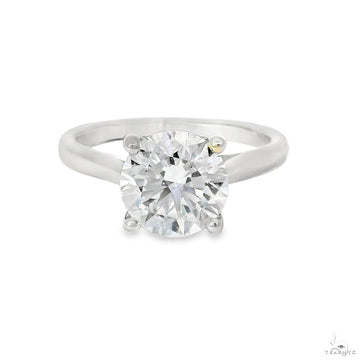
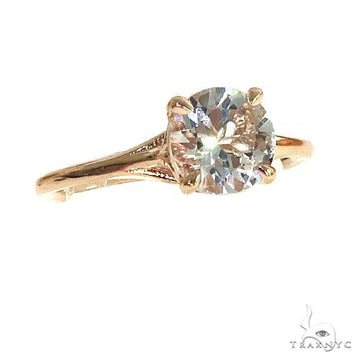
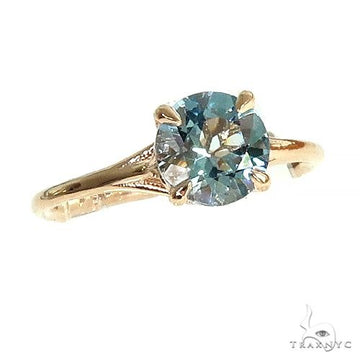
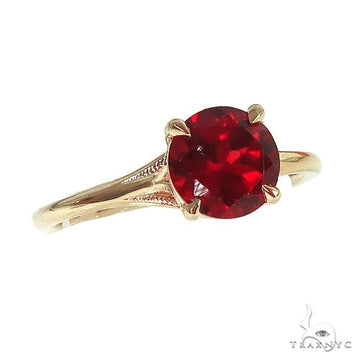
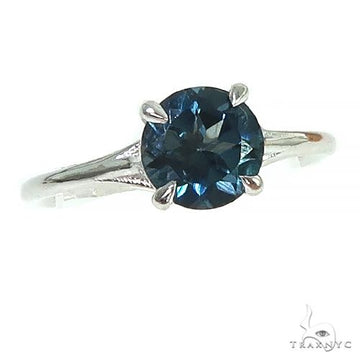
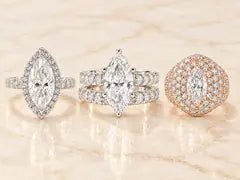
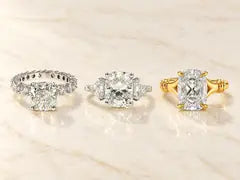
Choose the stone first, because on a solitaire it is the whole ring. Most rings here hold one lab-grown diamond, with centers from 1 to 6 carats. Pick the shape she already wears. Then take 14K gold in her color and measure her size before you order. The gemstone solitaires set one colored stone instead, lighter rings for a birthstone or a stack.
Shape: which solitaire diamond shape to choose
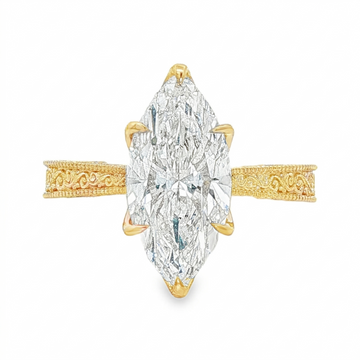
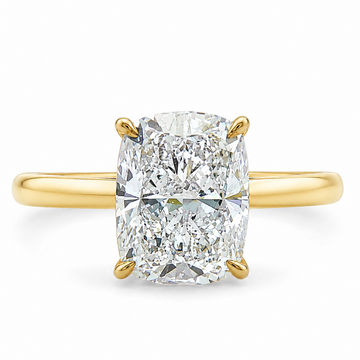
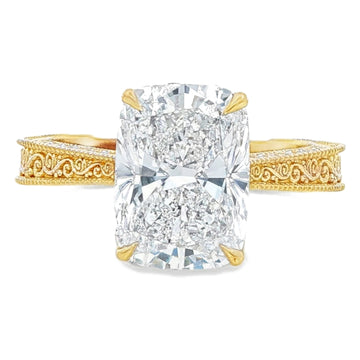
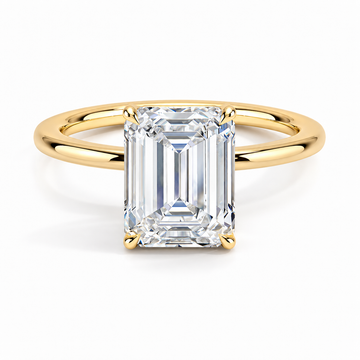
Buy the shape she already wears, or whichever she stops to look at. A radiant has straight sides, clipped corners and the sparkle of a round. A marquise or an oval lies along the finger, so it faces up larger than a round of equal weight. A round sits compact and throws the most light for its size. Most cushions here are elongated, with soft corners. Each shape has its own page, from radiant and marquise to oval.
Carat and grades: how big a center stone, lab-grown or natural
Start at two carats: most diamond centers here run two to three and a half carats. Read the carat of the center alone, not the side diamonds. Nearly every center is F or E color and VS or cleaner, so it looks white. All but two of the diamond solitaires are lab-grown; the two natural ones are a black diamond and a platinum ring. Lab-grown and natural diamonds of the same grade look the same; a natural diamond costs more. We don't sell diamonds as an investment, and resale value isn't guaranteed for either.
Hidden halo: plain solitaire or hidden halo, and how it is set
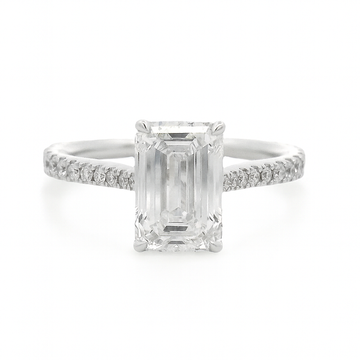
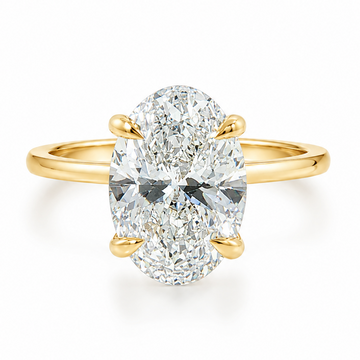
Take the plain solitaire if she wants the stone alone on gold. A hidden halo is a thin row of tiny diamonds set beneath the center. It shows only from the side, so from above she sees one stone. Nine rings here name a hidden halo in the title. Prongs or claws hold nearly every center and let light into it. One emerald cut sits east to west in a bezel, a rim of gold around the stone. Choose her wedding band with the ring, and ask the live chat how the two sit together.
Gemstones: colored stone solitaire rings and birthstones
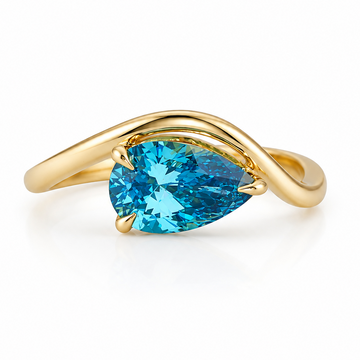
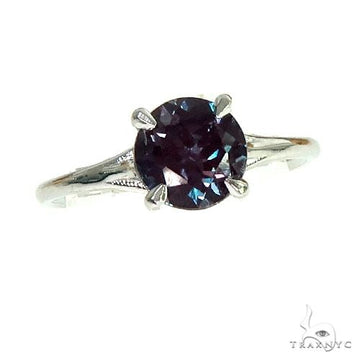
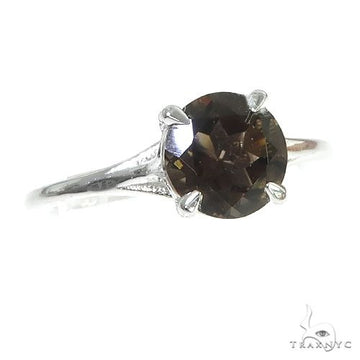
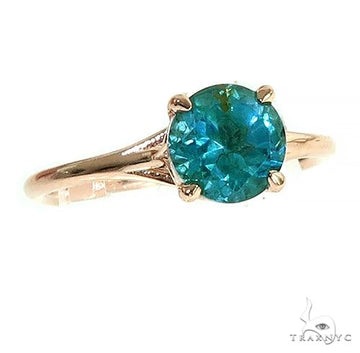
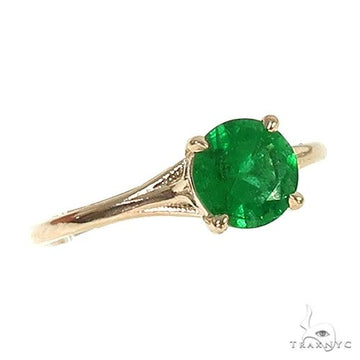
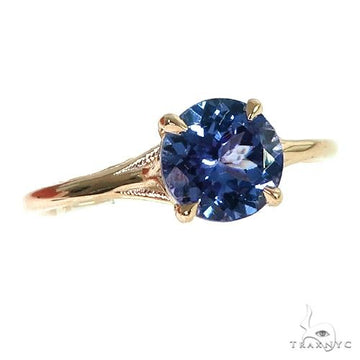
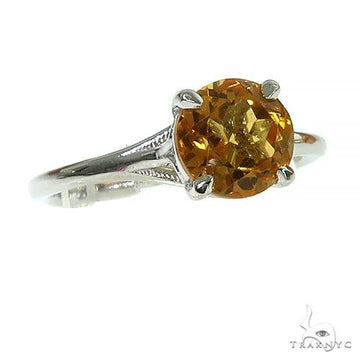
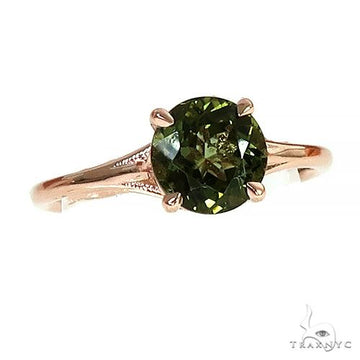
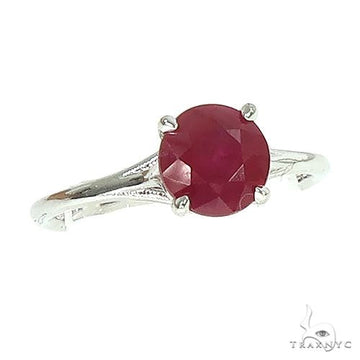
The gemstone solitaires set one round colored stone in place of a diamond, each close to a carat. The colors run from purple amethyst and blue topaz to red garnet, green peridot, ruby and tanzanite. They are light 14K rings, none over two and a half grams, made to stack with a band or to stand alone as a birthstone. Every colored stone is softer than a diamond, so take it off for the gym. More colors wait on women's gemstone rings.
Gold and size: 14K or 18K, her ring size and the wait
Pick 14K for a ring worn day and night. A few come in 18K, a deeper yellow that shows wear sooner. Nearly all offer yellow, white and rose. Every ring offers sizes 5 through 8, half sizes included. Measure a ring she wears on that finger and tell us which hand. Many listings say made to order, set in her size after you buy. Get the size right first, because a resized ring is final sale. For questions, start with the live chat, then call or text 212-872-9692 from 10 AM ET.
Questions we get in the store
Can I get a solitaire in another gold, prong or size?
Often, yes, but ask first. Most rings here come in yellow, white and rose 14K, in half sizes. The live chat can say whether 18K, platinum, other prongs or engraving can be done. Any change made for her is custom work, and final sale.
When will the ring ship?
A ring already made usually ships in two to five business days, tracked. One made to order takes longer, since each is set in her size first. Ask the live chat for the wait on yours before you pay.
Does the diamond come with a certificate?
Some of the lab-grown solitaires name an IGI report for the center on the listing. For any other ring, ask the live chat which report or appraisal comes with it before you pay, and keep the papers with the ring.
More questions we get
What is the difference between the center carat and the diamond weight?
The center carat is the main stone alone. The second, smaller weight counts the tiny diamonds around or under it. An oval with a 3 carat center, for example, adds 0.15 carat of hidden halo beneath it.
Lab-grown or natural diamond for a solitaire?
Either one works, and a single stone shows everything. Lab-grown and natural diamonds of the same grade look the same; a natural diamond costs more. We don't sell diamonds as an investment, and resale value isn't guaranteed for either.
Should I choose a plain solitaire or a hidden halo?
Choose plain if she wants the stone alone, and a hidden halo if she likes extra diamonds seen from the side. From above, both read as one stone. Nine titles here say hidden halo, from a 1.30 carat marquise to a 6 carat radiant.
What ring sizes do the solitaires come in?
Sizes 5 to 8, with every half size, are on all of them. Most start at 4, and every lab-grown ring reaches 9. Four round and emerald cut rings go up to 10. For a size outside the list, ask the live chat.
Can I return a solitaire engagement ring?
Ready-made, yes, within fourteen calendar days of delivery, unworn and unaltered. Clear it with customer service first (service@traxnyc.com, 212-391-3832); it ships only on our return label. The 5 percent restocking fee and the return shipping come off the refund. Made-to-order, resized or changed rings are final.
How much does a solitaire engagement ring cost?
Each listing prints its own price. It follows the center stone's carat, shape, grades and origin, and the gold of the band. For a stone or size not listed, ask the live chat, or call or text 212-872-9692 from 10 AM ET.

 Search
 Best seller