Measure your hand first, then choose the gold, the stones and how the bangle goes on
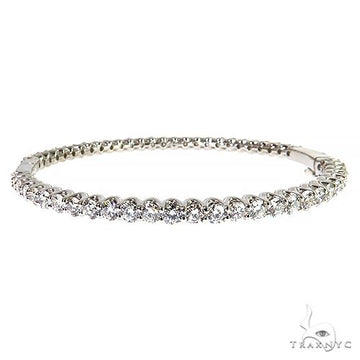
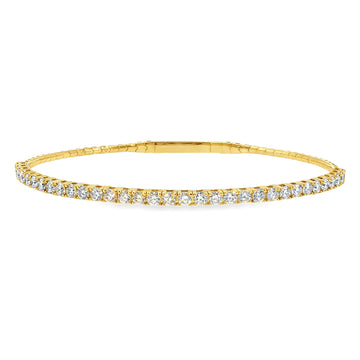
Measure your hand before you pick a style. A closed bangle has to slide over your knuckles, and every bangle here that states its size is 2.5 inches across. Take 14K for daily wear, the gold of nine in ten pieces bought. The slimmest flexible diamond bangle sold best by far. Most listings do not say how a bangle goes on, so ask us before you pay.
Bangle size: the bangle size chart, what size bangle bracelet to buy and how to measure your hand
Measure the hand, not the wrist. A closed bangle has to pass over the knuckles, so fold the thumb into the palm and run a soft tape around them. Divide the reading by 3.14 for the smallest opening that will pass. Every bangle that states a size is 2.5 inches across, or 63.5 mm inside, the usual size for a woman. It clears a hand up to about 7.85 inches around. Small runs 2.25 inches and large 2.75, and the chart sets each one against the hand it clears. The flexible, stretch and linked pieces give no size, so send your measure to the live chat first, or text it to 212-872-9692 from 10 AM ET.
The gold: 14K, 18K or 21K gold bangles
Take 14K for a bangle you never take off. It is the hardest of these golds and keeps set stones tight, and it was the gold of nearly every bangle bought. Most 14K pieces come in yellow, white or rose. 21K is seven eighths pure gold, the deepest yellow of the three and the softest, so it dents and scratches sooner. All nine 21K bangles are yellow. They weigh 5 to 12.5 grams. 18K sits between, at three quarters gold. See the nine 21K pieces alone on 21K gold bangles.
How it goes on: flexible, stretch, open or closed bangle bracelet
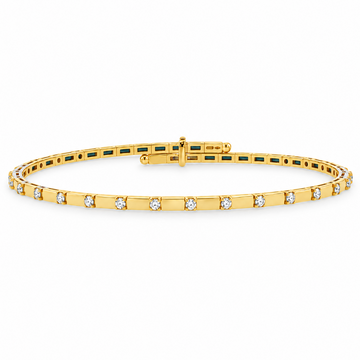
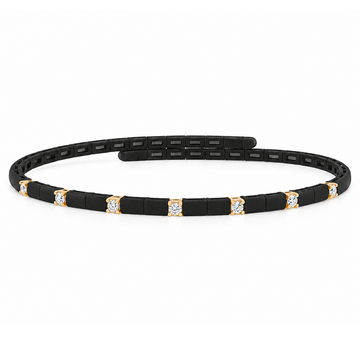
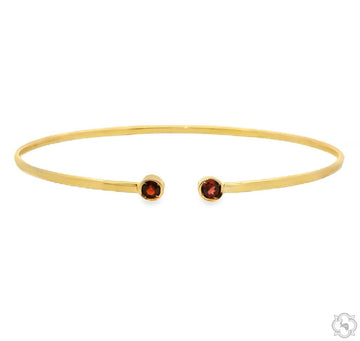
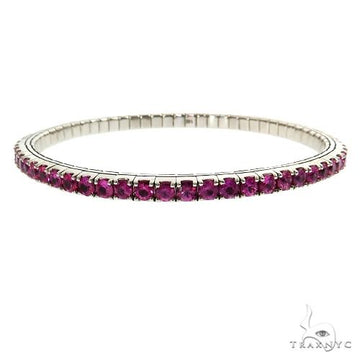
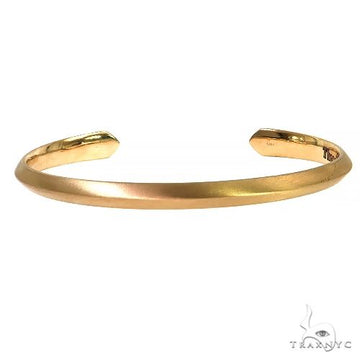
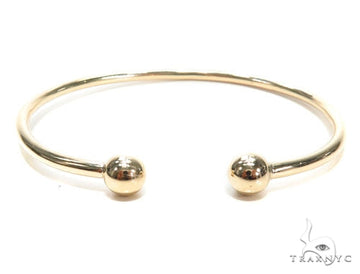
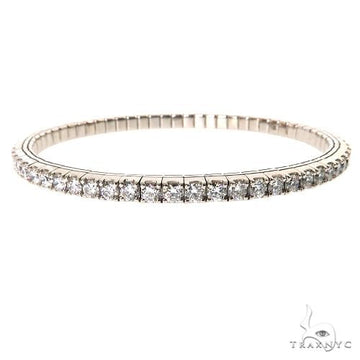
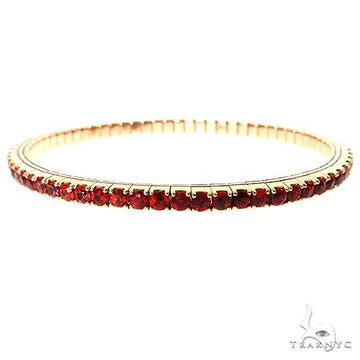
Ask how a bangle goes on before you buy, because most titles never say. A flexible bangle moves with the wrist, and the flexible diamond bangles made over four in ten of the pieces bought. A stretch bangle stretches over the hand and closes snug, with no clasp to work. An open bangle has a gap between its ends, and you ease the narrow side of the wrist through it. A bangle with no give must clear the hand whole. Two pieces are linked bracelets that drape like a chain, one of them black or gray titanium with 18K gold.
Diamonds and sapphires: diamond bangle bracelets, lab-grown or natural, sapphire bangles
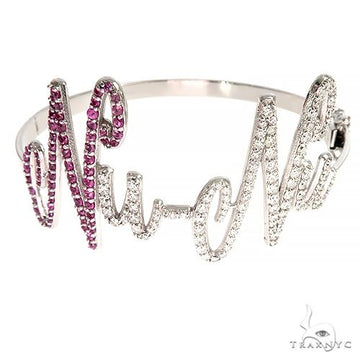
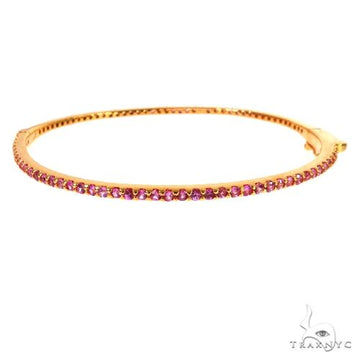
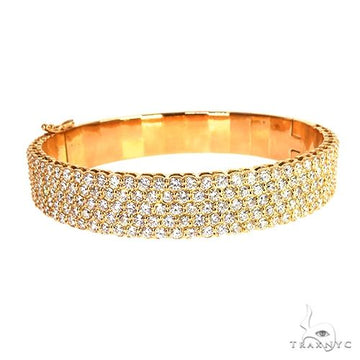
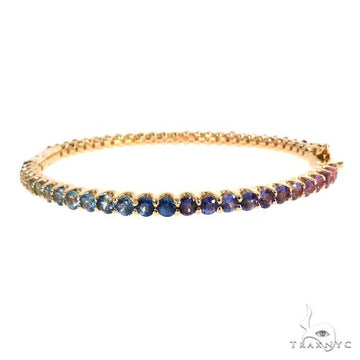
Read the origin line on a diamond bangle: the best seller, the flexible diamond bangle, says natural there. Most listings that name an origin say natural, and two say lab-grown in the title. For color, take sapphire. It is hard enough for every day, and it runs from a thin pink line to the rainbow bangles, stones in a run of colors. The two open bangles carry red or purple stones that their listings never name, so ask what they are. For a full row of diamonds with a clasp, see women's tennis bracelets.
Stacking: how to stack gold bangles, thin bangles and a watch
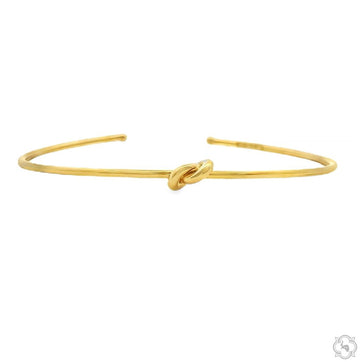
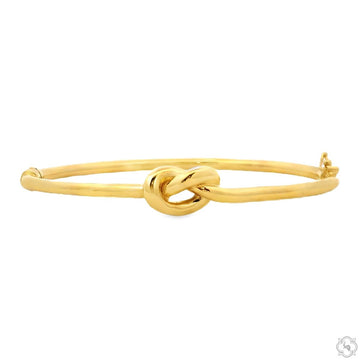
Stack thin. More than half the bangles that print a band width are under 3 mm, and those sit together without crowding. Keep to one gold color on a wrist unless you mean the mix. A diamond will scratch gold, so a stone bangle worn against a plain one marks it, and soft 21K marks first. On the watch wrist, wear one slim bangle, or move the stack to the other arm. The two knot bangles are the plain gold bought most, and at their light weight they stack well.

 Search
 Best seller