Real gold: how to tell if a gold bracelet is real
Start with the stamp. Turn the bracelet under a strong light and look on the clasp, its tongue, a small tag beside it or the last link: 417 or 10K, 585 or 14K, 750 or 18K. The three-digit mark is the gold share in parts per 1,000. A stamp can be struck on anything, so weigh the bracelet next. On a scale that reads grams it should land close to the weight its listing prints, and 513 of the 518 listings here print one.
Two more checks at the kitchen table. Yellow karat gold does not pull to a magnet, though the clasp may, if its spring is steel. And look where the bracelet rubs: yellow worn through to grey or white is plating over another metal, not karat gold.
Of the 518 bracelets here, 492 list karat gold as their metal, and no title calls one plated or filled. The 21 in sterling silver say silver in the title. A gold piece shipped inside the US comes with our appraisal, which records its grams; an order shipped abroad gets the appraisal as a digital file. The full test is in how to tell if gold is real, and plated, filled and vermeil are set side by side in solid gold or plated.
Karat: 10K, 14K or 18K gold bracelet
Karat is the share of gold: 10K is 41.7 percent, 14K is 58.3 and 18K is 75. The rest is alloy, and the alloy is what hardens the metal. That matters more on a wrist than at the neck, because a bracelet meets a desk, a car door and a watch case all day.
Most people land on 14K: 406 of the 518 listings, and nearly three in four of the pieces sold in the year. It is a warm yellow, hard enough for daily wear. 10K is the palest and the hardest of the three; 67 listings, 50 of them Cuban links, and 8 percent of the pieces sold. 18K is the deeper yellow and the softest, so it shows fine scratches sooner; 10 listings carry it. The nine 21K bangles are 87.5 percent gold, softer again. Browse 14K gold bracelets, or compare the three karats in 10K vs 14K vs 18K gold.
Style: gold bead, Miami Cuban, tennis, curb, rope and Franco bracelets
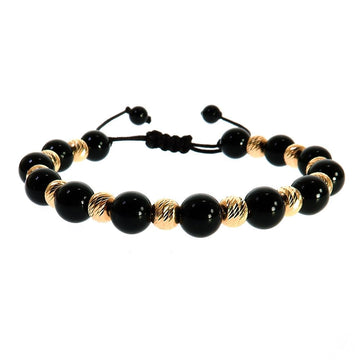
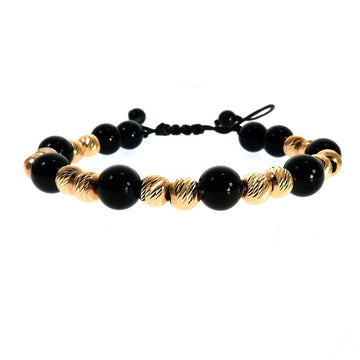
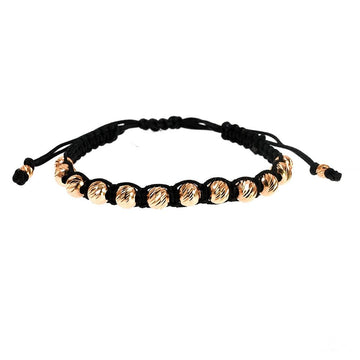
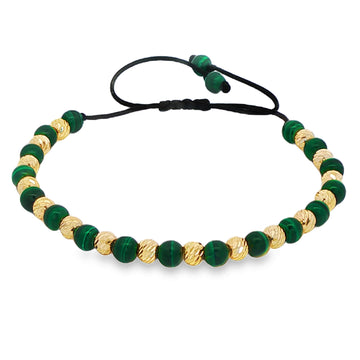
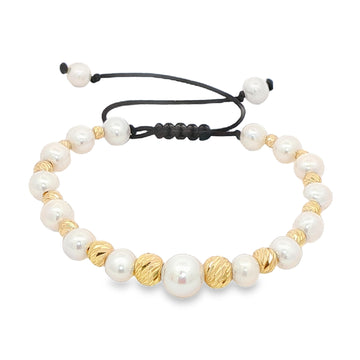
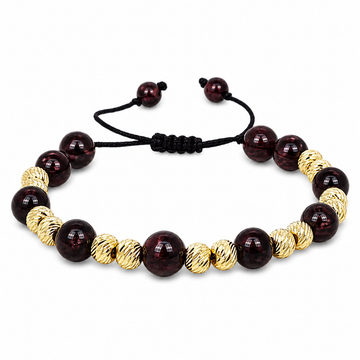
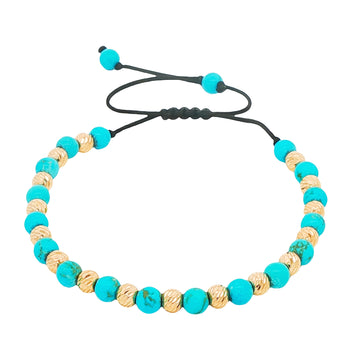
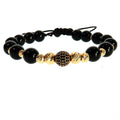
Bead bracelets made up half the pieces bought here in the year: 14K gold beads on their own, or mixed with tiger eye, pearl, turquoise, malachite or black diamond beads. The middle one weighs 2.7 grams. Shop them in gold bead bracelets.
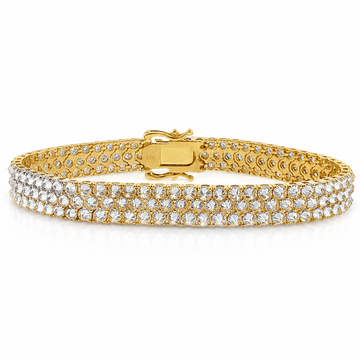
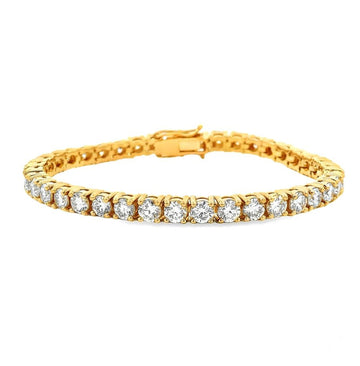
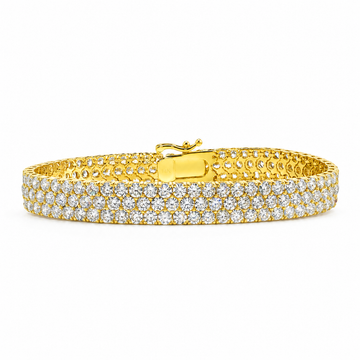
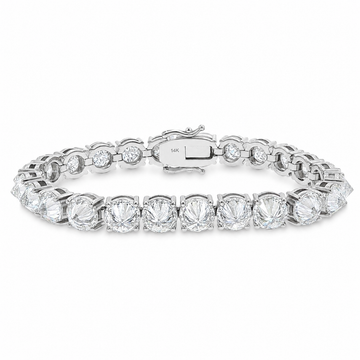
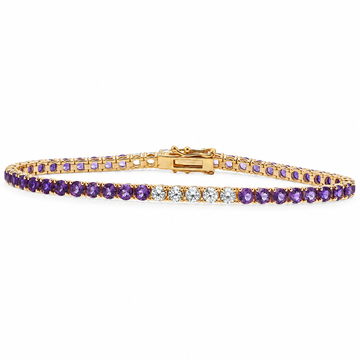
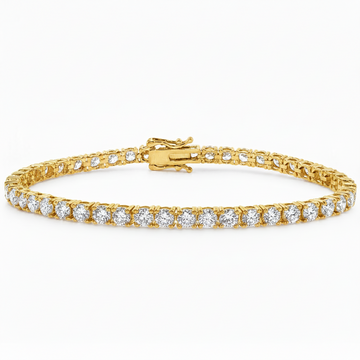
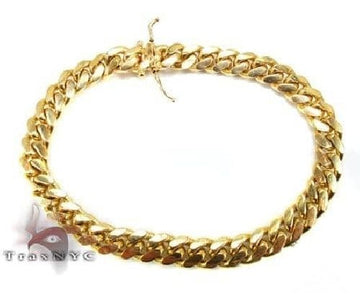
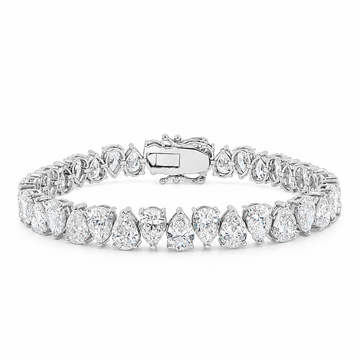
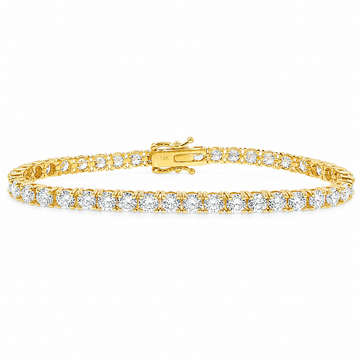
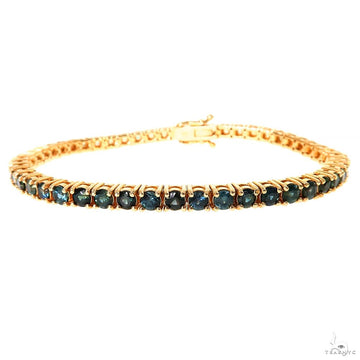
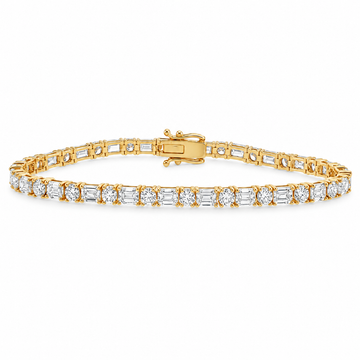
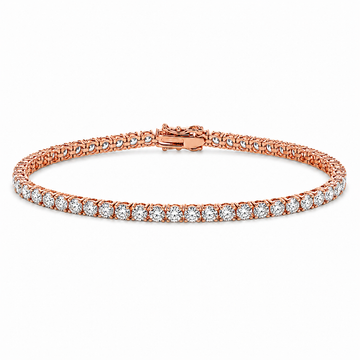
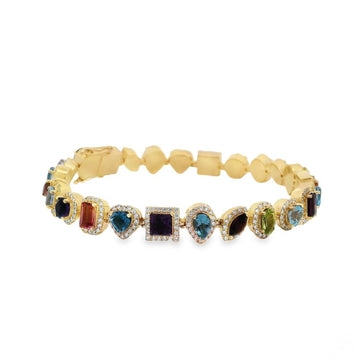
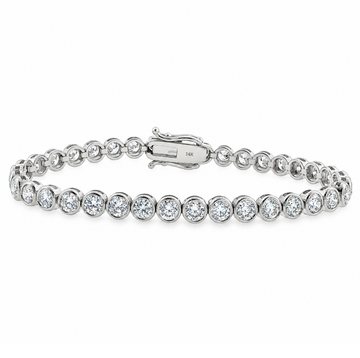
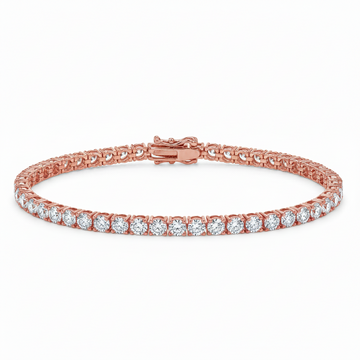
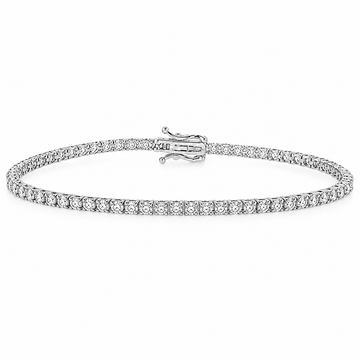
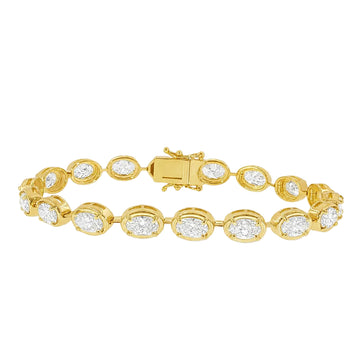
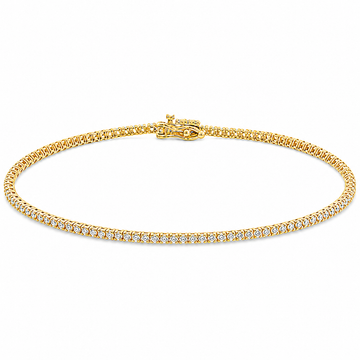
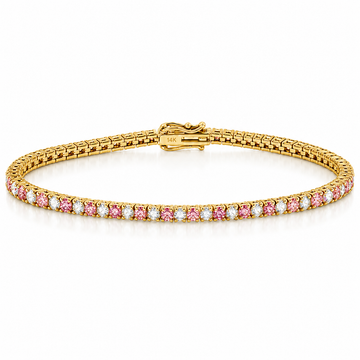
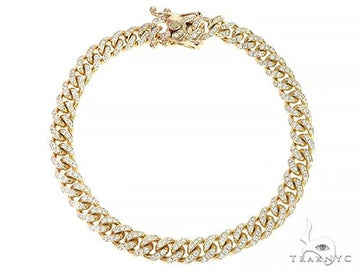
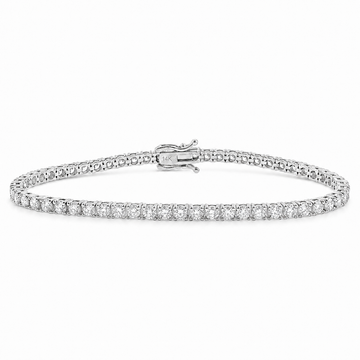
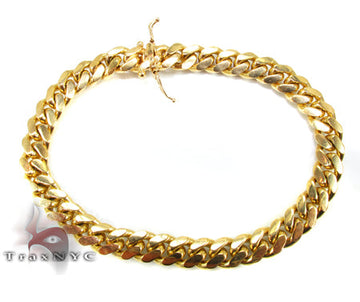
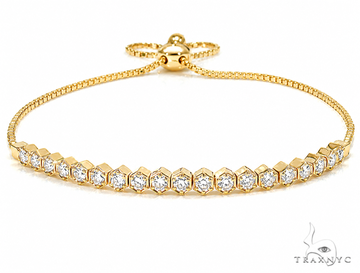
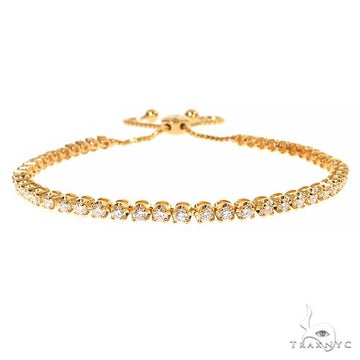
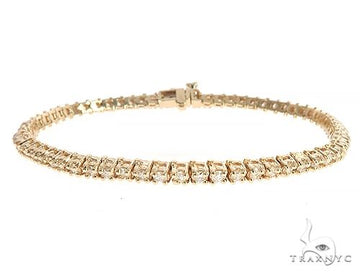
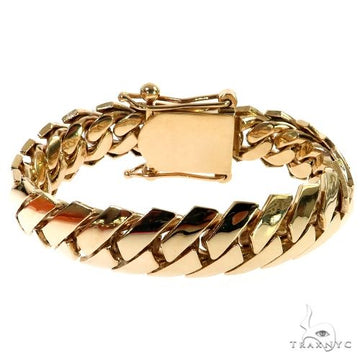
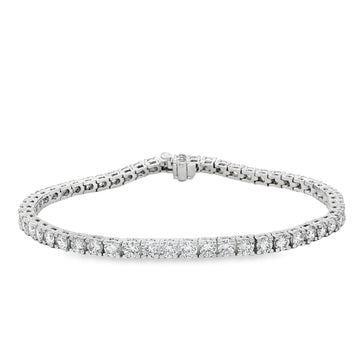
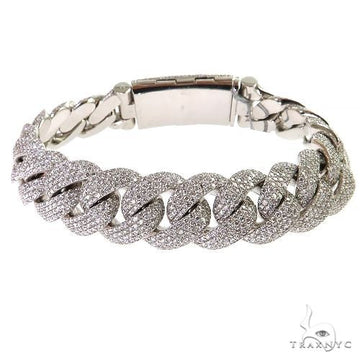
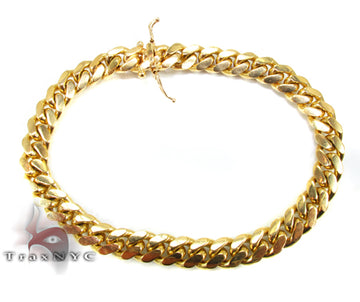
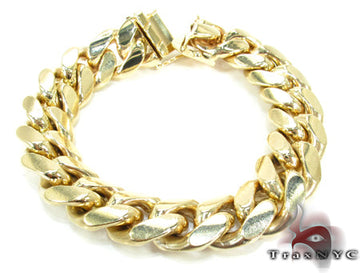
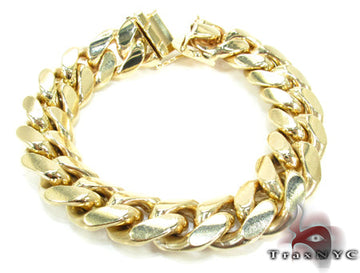
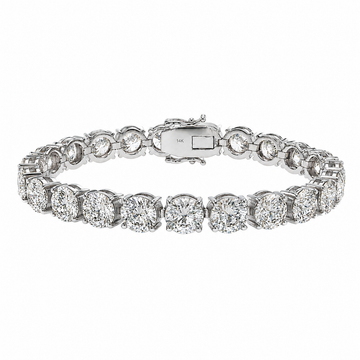
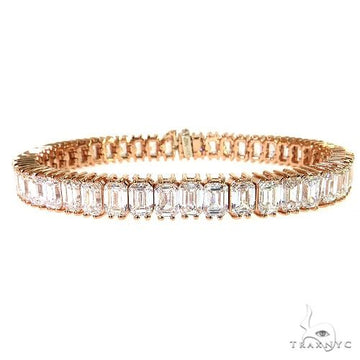
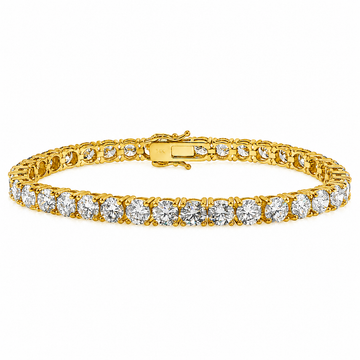
Cuban links have the most listings, 180 in 14K, 10K and silver, 158 of them Miami Cubans, from 2.5 mm to 30 mm across; most are on men's Miami Cuban bracelets. Tennis bracelets, 119 here, are a row of set stones: diamonds on 86, and colored stones such as sapphire, emerald, ruby or opal on the rest; see tennis bracelets.
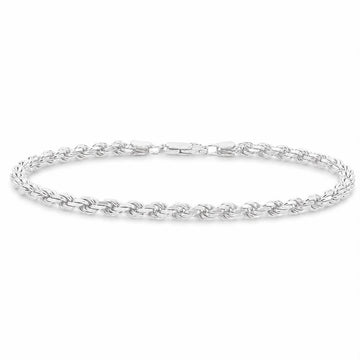
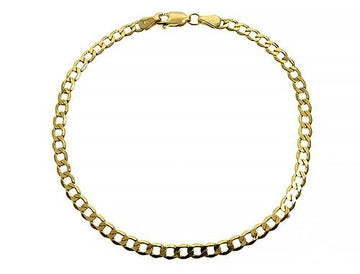
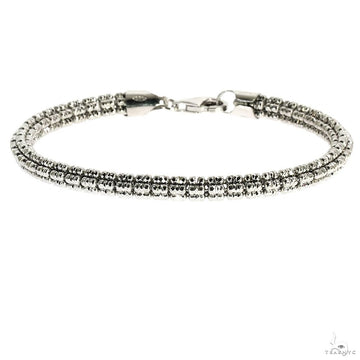
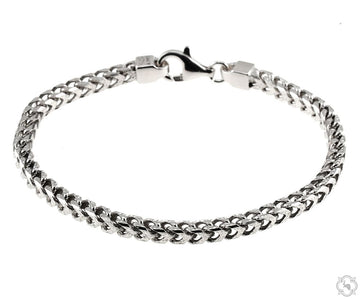
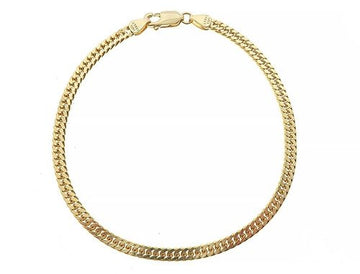
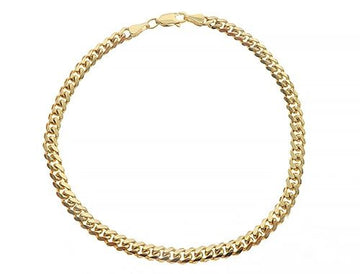
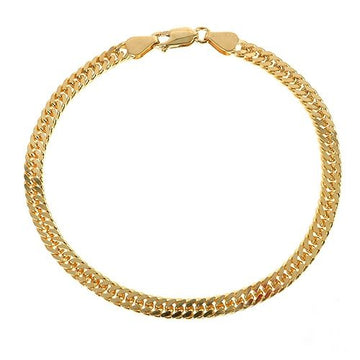
For a thin chain link, the middle curb here is 3.8 mm and 4 grams, the rope 3.7 mm and the Franco 3.8 mm: curb link bracelets, rope bracelets and Franco bracelets. There are 35 bangles, and the nine in 21K each list a 2.5-inch diameter: gold bangle bracelets. The table below gives every style its middle width and grams.
Wrist size: what size gold bracelet, 7, 7.5 or 8 inches
Start with a strip of paper wrapped snug around the wrist; mark where the end meets and lay it flat on a ruler. Add about half an inch for a bracelet that sits close and about an inch for one that moves. A chain link may slide a little; a tennis bracelet should not spin.
Most bracelets here come in one length: 387 of the 518 print a single length, most often 8 inches (110 listings) or 7 (95). Of the bracelets sold in one fixed length, 56 percent were 8 inches and 17 percent 7.5. The ones listed for women only run shorter, most often 7 inches. Another 44 listings let you pick the length, 7, 7.5 or 8 inches on most, and 27 of those are tennis bracelets. Nine bead bracelets say adjustable in the title.
If no listing offers your length, talk to the desk first: once a piece is altered to your wrist, it cannot be returned. The wrist chart is in bracelet size, from the wrist to the length.
Care: how to clean a gold bracelet at home
Warm water, a few drops of plain dish soap and a soft toothbrush are all it takes. Soak the bracelet ten minutes, brush where one link meets the next, rinse it under warm running water over a strainer, then pat it dry and give it a full hour in the air before it goes back in the box. Karat gold does not fade; it collects a film of sweat, soap and lotion, and the film washes off.
Run a fingernail along every prong of a tennis bracelet before the soak, and keep it in the water five minutes. A bead bracelet on a cord skips the soak: stone beads such as pearl, malachite or turquoise dull under soap and a brush, and a cord left wet wears out sooner, so wipe it with a soft dry cloth. Keep gold out of the pool and the hot tub, where chlorine attacks the alloy and the solder, and skip toothpaste, baking soda, vinegar and bleach. More by link style in how to clean gold jewelry.

 Search