
 Search
How to Buy a Tennis Bracelet: The Two-Minute Film
The pointer, the millimeters, lab or natural and the casting: the store's two-minute film on buying a tennis chain or bracelet.
A two-minute film from the TraxNYC store on 47th Street about buying a tennis chain or bracelet. Its host, AI Trax, is an AI: Trax built him to explain what buyers ask before they buy, and he says so in the film. Below is everything he says.
What AI Trax says in the film
Buying a tennis chain or bracelet? The mistake I see every day on 47th Street is shopping by the carat total. I'm AI Trax, Trax's AI jeweler. Two minutes, and you'll buy it right.
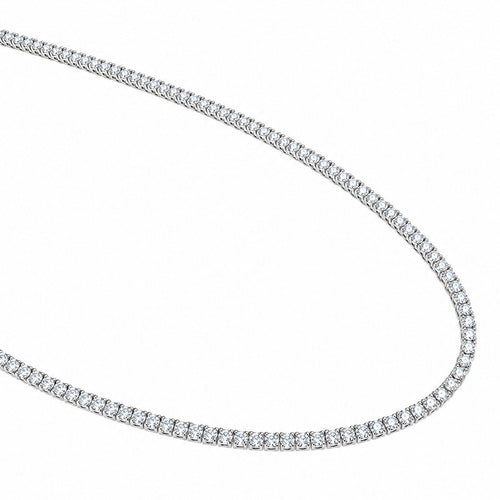
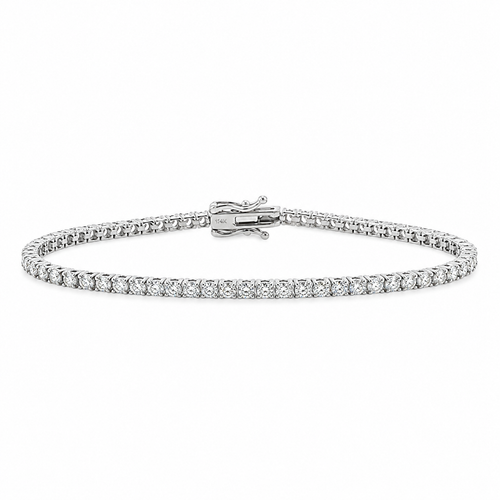
1. Read the pointer: the size of each diamond. Ten pointers make a carat. The total just adds them up, so 7 carats can be a thin chain, or a bracelet of 15 pointers.
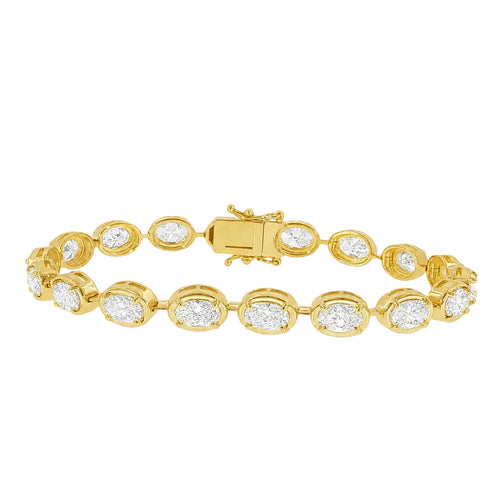
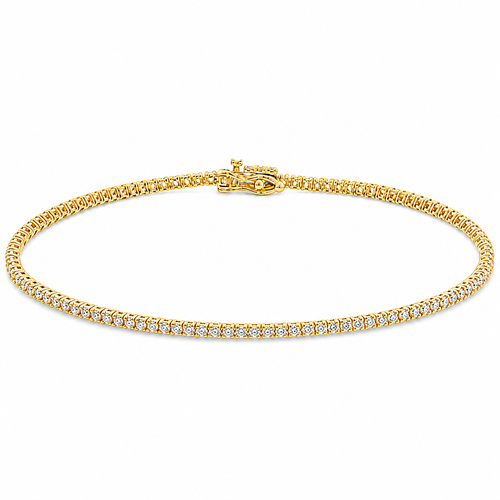
2. Check the millimeters: that's how wide it sits on you. Our thinnest chain is 2 millimeters. A 10 pointer is about 3.5; 1 carat each, 6.5.
3. Lab or natural. At the same grade they look the same, and our 15 pointer bracelet comes both ways. Lab-grown gets you a huge, crystal-clear diamond for the money. A natural diamond is a gift of value, with a public price sheet behind it.
4. The casting. A good tennis chain is stiff: it holds its line, and the diamonds stay face up. Nothing that folds is good, unless it's laundry or a lawn chair.
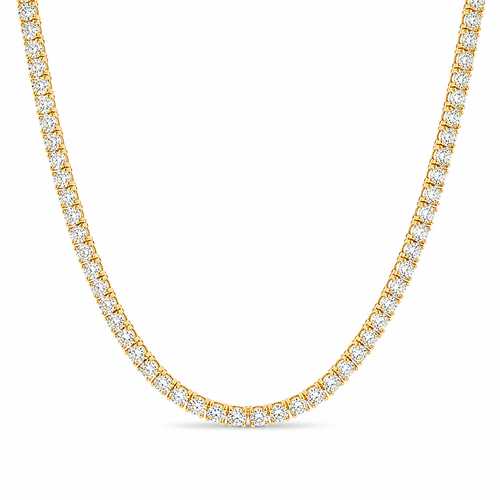
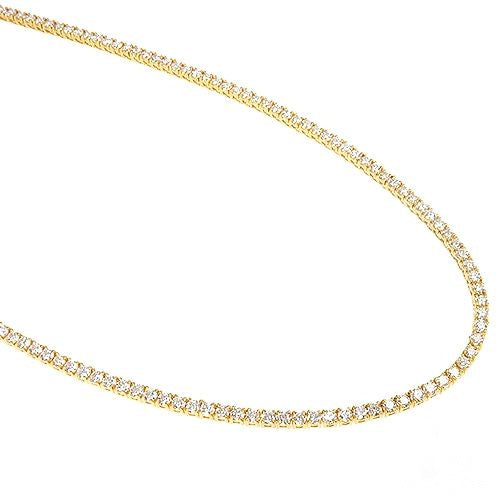
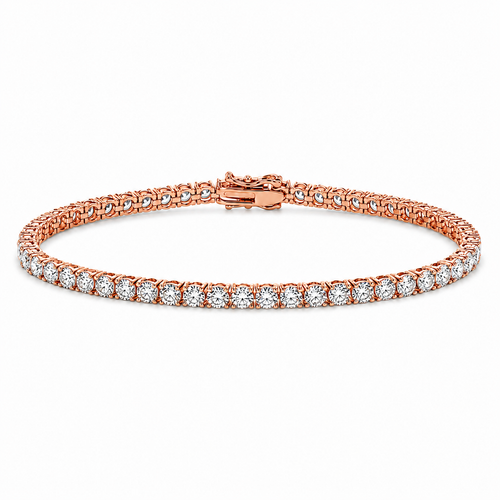
5. Make it yours: yellow, white or rose gold, rainbow sapphires or mixed shapes. Wear one, or layer two or three, and stack a bracelet with your watch.
So: read the pointer, check the millimeters, choose lab or natural with open eyes, and make sure it's stiff. Then talk to a personal jeweler: live chat, or call or text 212-TRAX-NYC. A person answers every day from 10 AM. At night, the chat answers.
In our case now

Read next
- Lab-grown vs natural diamonds
- Diamond size chart
- Diamond tennis chain guide
- Men's bracelet buying guide
Before you buy
The chains in this story, and the guides from the store


